
Filmanize is a UK web app for film production that states its promise in one line: from script to call sheet. You upload your text and get a breakdown — an automatic AI pass is offered as an option — you match actors to roles, you get a suggested shooting schedule, you track a budget against rate cards, and the app builds the day's call sheets from the scenes being shot, with the location weather attached and manual or scheduled sending. It is a coherent chain, built for independent productions, and it honestly covers the ground it claims. Soldum covers the same ground and keeps going: the budget, the financing plan behind it, and cost tracking while the shoot is running.
This page is not out to disqualify Filmanize, whose scope is stated plainly. It sets out what changes when one tool holds the whole chain — the breakdown, the schedule, the call sheets and the budget reading the same data — instead of handing the money half to a spreadsheet. That is the criterion that decides the choice far more often than a feature count does.
- AI screenplay breakdown on upload: scenes, locations, cast, extras, costumes, props and technical needs.
- Shooting schedule and call sheets derived from the breakdown, so a change lands in both at once.
- A full budget in the same tool, with quantities read from the breakdown rather than typed in again.
- Estimates, commitments and actuals on the same account, with alerts firing on commitments rather than invoices.
- Budgets built for French industry rates and financier formats when you shoot in or with France, and in your own structure when you do not.
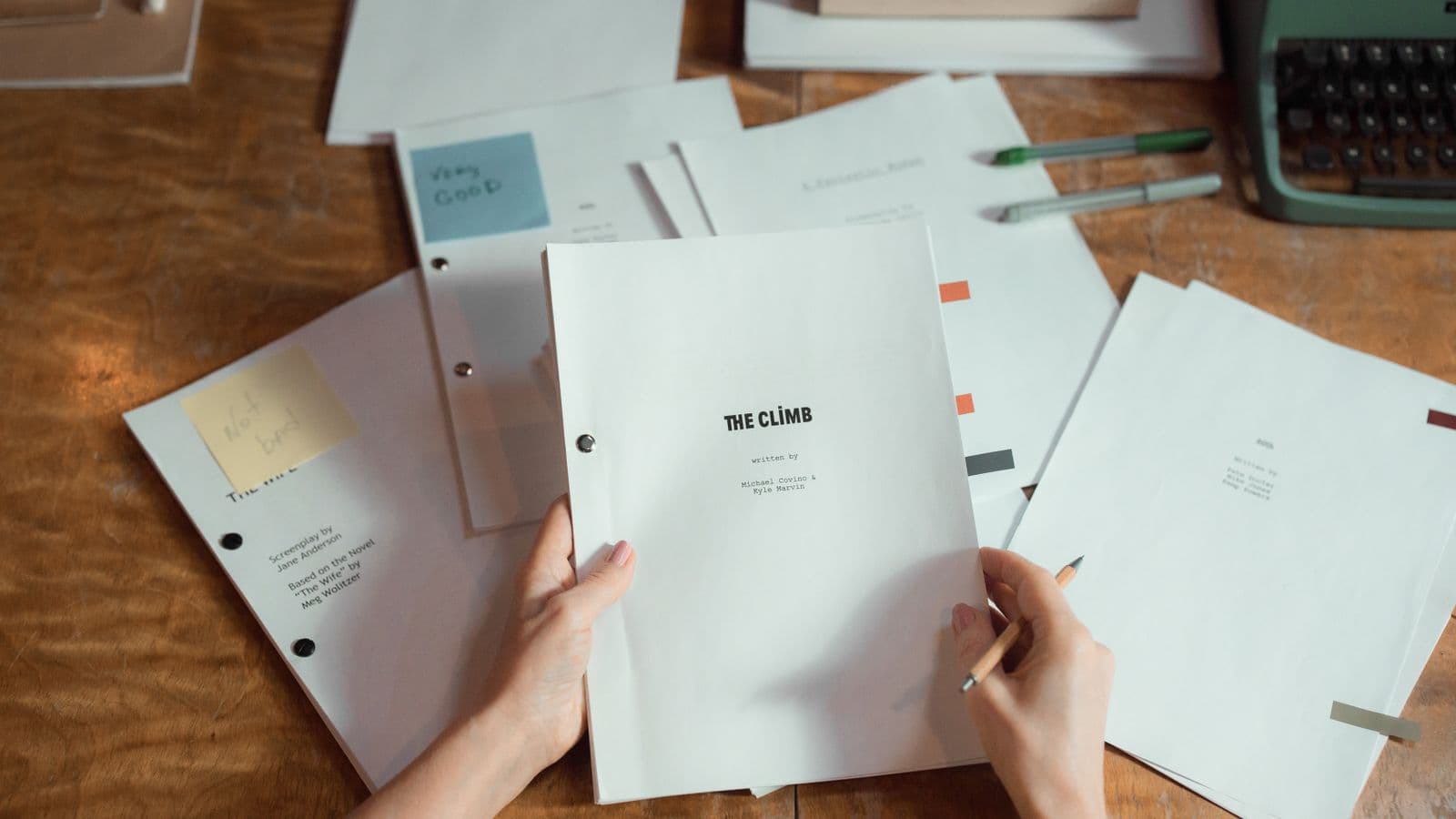
What Filmanize does well, and it should be said
Filmanize is published in the United Kingdom and aims first at independent productions. Its public material is explicit about the scope: upload a screenplay and get a breakdown, with an optional automatic AI pass; match actors to roles; track a budget against rate cards; get a suggested shooting schedule; and produce call sheets from the scenes scheduled for a given day, pulling in the required cast and items along with the location weather forecast, sent manually or on a schedule. The publisher was selected for the San Sebastián Film Festival Startup Challenge and publishes case studies from independent features. Nothing below claims that a tidy script-to-call-sheet chain is the wrong tool — that is ground Soldum works on too. The comparison is decided by what happens after the call sheet goes out.
A call sheet is not the last document of a project
This is the distinction that settles the choice. A chain that stops at the call sheet covers making the shoot happen, not the life of the production: before the floor there is a budget to put in front of a financier, during the shoot there are overages to see coming, and afterwards there is a cost report somebody will audit. In most productions those three steps end up in a spreadsheet, and that spreadsheet has no remaining link to the breakdown that fed it. Every script revision is then paid for twice — once in the preparation chain, once by hand in the costing file. Soldum holds the same material from the script through to the cost report: the breakdown feeds the schedule, the call sheets and the budget, and a change propagates through all three.
| On this point | Script-to-call-sheet tool | Soldum |
|---|---|---|
| Screenplay breakdown | Core of the product | AI-generated, reviewed and approved by you |
| Shooting schedule | Suggested from the breakdown | Derived from the breakdown, tied to the budget |
| Call sheets | Generated and sent | Generated from the schedule and sent to the crew |
| Full budget in the same tool | Budget tracking against rate cards | Budget derived from the breakdown |
| Cost of a schedule change shown before you commit | ||
| Estimates, commitments and actuals per account | ||
| Financing plan and tax credit base | Out of scope | Built as you cost the film |
| Crew pay compared against industry minimums | Rate cards you maintain | French collective-agreement minimums built in |
One tool from the script to the cost report
The question worth asking of any tool is how many others you still need around it. A chain that covers the breakdown, the schedule and the call sheets covers three documents well, which means the budget lives in a spreadsheet and the cost report lives in a second one — two files, two exports, and two chances for the film they describe to stop being the same film. The cost of that split never shows up on a feature list; it shows up as the afternoon someone spends reconciling a schedule with a budget that no longer matches it, usually the week a financier asks for an updated version. Soldum covers the whole chain from a single source: what the AI extracted feeds the schedule, the call sheets, the budget and the cost report at once, and a change made in one of them is a change in all of them.
The breakdown decides everything downstream
Automation is only worth having if you can trust the output, and a screenplay is full of things a model can read the wrong way: a location named two different ways across forty pages, a character who appears only in a line of action, a prop implied rather than written, a night scene signalled by nothing but a line of dialogue. Soldum treats the AI pass as a first draft, not a verdict. Nothing is applied without your approval: you review the breakdown scene by scene, correct what was misread, add what the text leaves implicit, and the approved version is what the schedule, the call sheets and the budget are built from. That review is where the real saving is decided — it takes hours where manual entry takes days — and it is what makes every number downstream dependable, since three documents out of four flow from it.
From breakdown to schedule, with no re-entry
In Soldum the breakdown is not an end in itself: it is the source the other documents flow from. A location extracted from the script becomes a number of shooting days, so a rental line and a transport account; a character becomes days worked, so a fee, the employer costs on top of it, and a row on the call sheet for the day concerned; a technical requirement noted in a scene becomes an equipment line in the budget. Those quantities are not copied from one file to another, they are read in one place. That continuity is what makes the difference in daily use — more than the accuracy of the initial extraction, because a correct but isolated breakdown still forces you to carry every change by hand into the schedule, then the call sheets, then the budget.
Pricing a day before you move it
In preparation the question is almost never what the film costs, but what this change costs. Losing the week-three location, adding a night shoot, pushing the start date by a month: each of those is decided in a couple of hours, and the budget is only updated much later, when nothing is negotiable any more. A tool that holds the schedule without holding the budget cannot answer: a human has to translate the move into crew hours, hotel nights and transport, then type the result somewhere else. In Soldum the schedule and the budget are two views of the same material — you move the day, and the cost of moving it appears before you approve anything.
Estimates, commitments and actuals during the shoot
Cost tracking is the step most preparation chains leave to a spreadsheet, and it is the step where the gap widens. In Soldum every account carries three figures: the estimate from the approved budget, the commitment — a vendor quote accepted, a rental confirmed, a deal signed — and the actual, once the invoice lands. The alert fires on the commitment rather than the actual: an overage flagged as you approve the rental house quote still leaves a choice between renegotiating, trading off elsewhere and accepting it. The same overage found while reconciling invoices three weeks after wrap leaves nothing to decide. And because the accounts being tracked are the ones the breakdown produced, there is no mapping table to maintain between the schedule and the chart of accounts.
Shooting in France, or with a French partner
If your production touches France, two things stop being cosmetic. Budgets are expected in the standardised cost categories French financiers and the national film body use, with employer social charges and overheads on their own lines rather than folded into a single fringe percentage; and crew rates are set by a national collective agreement, with minimums that a template built elsewhere simply does not carry. Soldum builds both into the budget: the structure a French financier expects, and pay compared against those industry minimums as you cost each role. That is a concrete advantage on a co-production and neutral everywhere else — the rest of the chain, from the AI breakdown to the call sheets and the cost report, works the same wherever you shoot.
Switching, or trying it without dismantling anything
There is no data migration to orchestrate: Soldum starts from the script. You export your text as PDF or Final Draft, you upload it, and the breakdown runs. In practice the most common migration is not really one — teams try Soldum on the preparation of a real project, ideally one already finished whose final cost they know, and compare what it produces with what they built by hand. It is the least risky test, since you compare two outputs on the same script without dismantling anything. The table below sets out where to start depending on your situation.
| Your situation | What matters first | Where to start |
|---|---|---|
| Independent feature with a financier to convince | A budget in the shape they expect | Breakdown, then budget and financing plan |
| Short film or first feature, small team | Holding everything in one tool | Breakdown, shooting schedule, call sheets |
| Preparation chain already in place | Not losing the upstream work | Break down the same script and compare both schedules |
| Shoot under way, budget to hold | Seeing overages coming | Commitment tracking on the approved budget's accounts |
| Co-production with a French partner | A budget both sides can read | Budget in French cost categories, Excel and PDF exports |
Who this alternative is for
Production companies, producers of features, documentaries, commercials and series, and line producers who spend their days keeping a breakdown, a schedule and a budget consistent with one another. If your need stops at running an independent shoot from the script to the call sheet, with no budget to defend and no cost report to produce, the argument falls away: a short, well-made chain remains the coherent choice. It is the moment the budget and the financing enter the picture that the gap becomes structural rather than a matter of taste.
What's your pre-production challenge?
Frequently asked questions
What is the main difference between Soldum and Filmanize?
+
Filmanize states a chain from the script to the call sheet, built for independent productions. Soldum covers the same ground and extends it: a full budget derived from the same breakdown, a financing plan, a tax credit base, and estimate / commitment / actual tracking while the shoot runs.
Does Soldum work outside France?
+
Yes. The AI breakdown, the shooting schedule, the call sheets and the cost tracking are the same wherever you shoot. French standardised cost categories and collective-agreement crew minimums are built in on top, which matters when you shoot in France or co-produce with a French partner.
Is the screenplay breakdown really automatic?
+
AI reads the script and extracts scenes, locations, characters, extras, costumes, props and technical needs. The result is still reviewed and approved by you: nothing is applied without your consent, and the corrected version is what the schedule, the call sheets and the budget are built from.
Do I have to migrate any data to try Soldum?
+
No. Soldum starts from the script: export your text as PDF or Final Draft, upload it, and the breakdown runs. The most telling test is to take a project you have already finished and compare the budget Soldum produces with the one you built by hand.
How is Soldum priced?
+
Soldum has no public price list. Every account starts with a 14-day free trial, no card needed, time enough to break down a first script; to continue, you book a 20-minute call with the team, and the price is set there according to your company and its projects.
Can Soldum run alongside a tool we already use?
+
Yes, and that is the most common setup at the start. You prepare the film in Soldum — breakdown, schedule, budget — and export the result to Excel and PDF to feed whatever circuit your production already uses.
Related reading
- Best pre-production software
- Celtx alternative
- Yamdu alternative
- StudioBinder alternative
- Call sheet software
- Shooting schedule software
- Short film pre-production software
- Guide: how to break down a screenplay
- Line producer budget software has to move with the schedule
- Soldum: the modern Movie Magic alternative
Informational comparison page, compiled from publicly available vendor information (November 2026); features and commercial plans change over time. Soldum publishes one of the solutions compared. Filmanize® and the other trademarks mentioned belong to their respective owners and are referenced only for the purpose of objective comparison.